 If you're looking for a rural destination that's also a benchmark in sustainability, Spain has some of the best options in the world. This is certified by the prestigious ‘Best Tourism Villages’ initiative, launched by UN Tourism in 2021 to honour villages that help preserve local traditions and biodiversity. Fancy a trip to discover them?
Aragón: Alquézar, Aínsa and Cantavieja
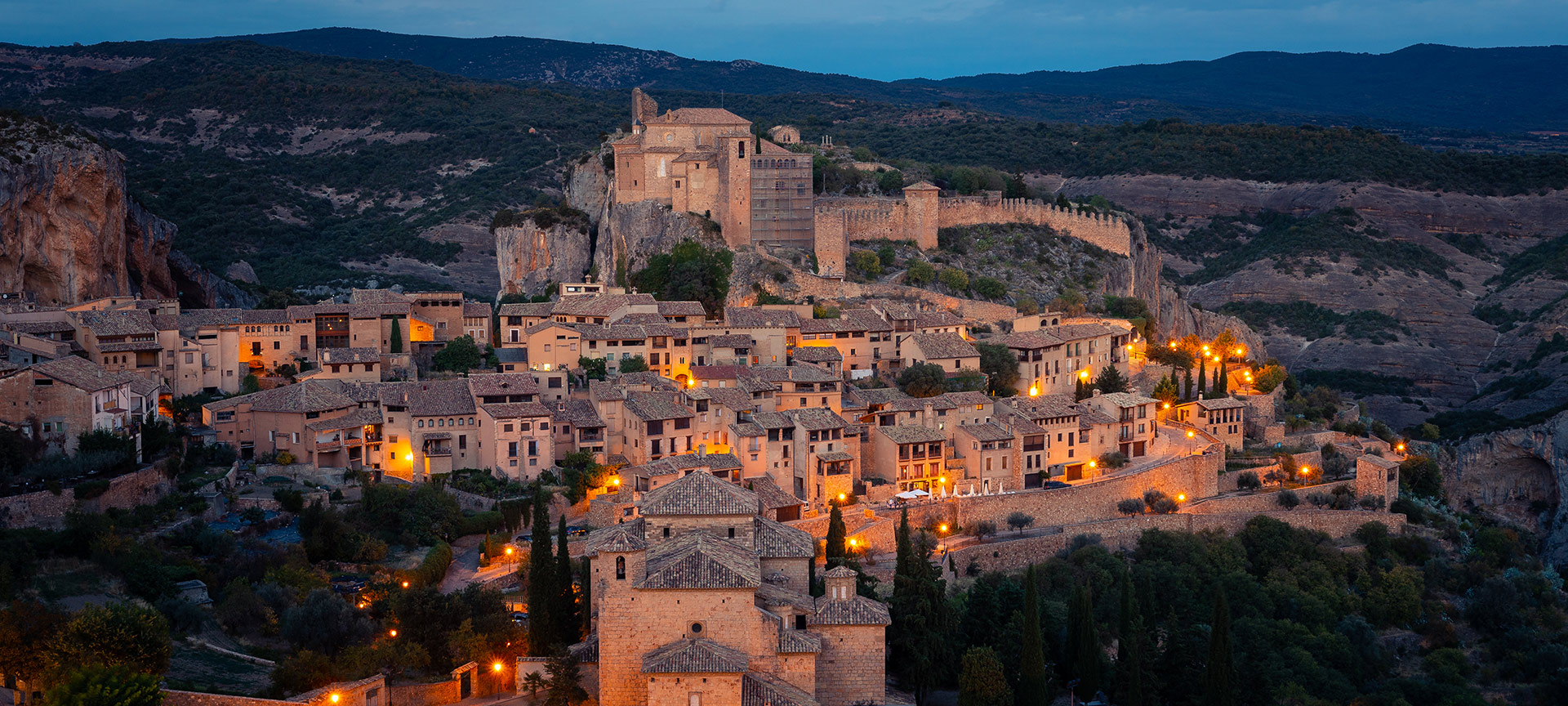
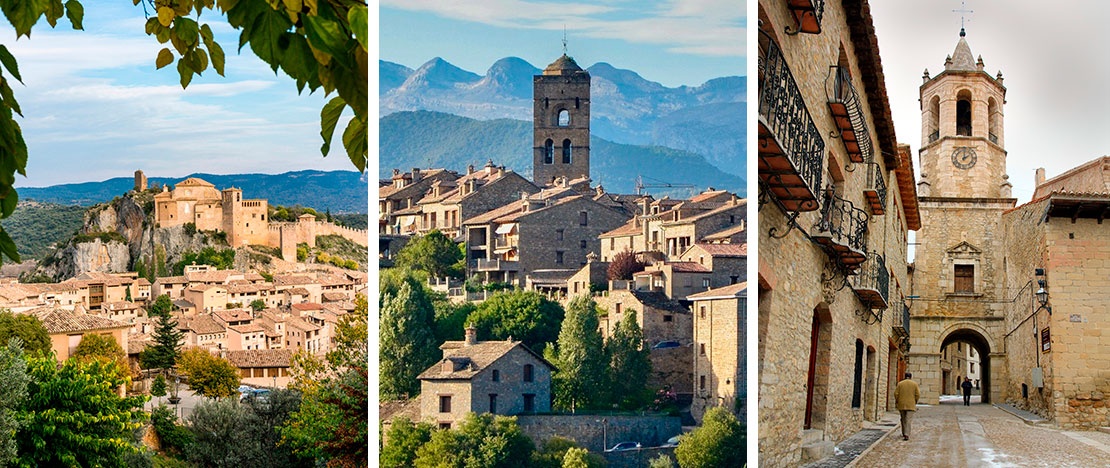
Alquézar, in the province of Huesca(Aragon), offers a perfect blend of culture and nature. River Vero Cultural Park, declared a UNESCO World Heritage Site for its cave paintings, is almost an open-air prehistory museum. Its castle-collegiate church of Santa María La Mayor, built on an old defensive bastion from the 9th century located on top of a hill, presides over the town. To enjoy its natural heritage, visit the Alquézar Walkways, a spectacular route of some three kilometres through the ravines of the river Vero. Plus, Somontano is a region of excellent wines.Still in the Sierra y los Cañones de Guara Natural Park is Aínsa, in a privileged location in the Aragonese Pyrenees, bordering the Ordesa y Monte Perdido National Park and the Posets-Maladeta Natural Park. This charming medieval village, surrounded by walls and Romanesque architecture, is located in the Sobrarbe region. Its imposing castle hosts a pop, rock and folk music festival every summer.Cantavieja, the epicentre of the Maestrazgo district in the province of Teruel, and the scene of historic battles, stands on a rock 1,300 metres above sea level. It boasts architectural gems such as the churches of San Miguel and La Asunción, the medieval La Nevera gate and its arcaded main square. If you want to explore breathtaking landscapes included in the Natura 2000 Network, don’t miss the Special Areas of Conservation (SAC) Muelas y Estrecho del Río Guadalupe, Maestrazgo y Sierra de Gúdar, and Rambla de las Truchas. Cantavieja is also part of the El Cid Route and has an overnight stay area for motorhomes.
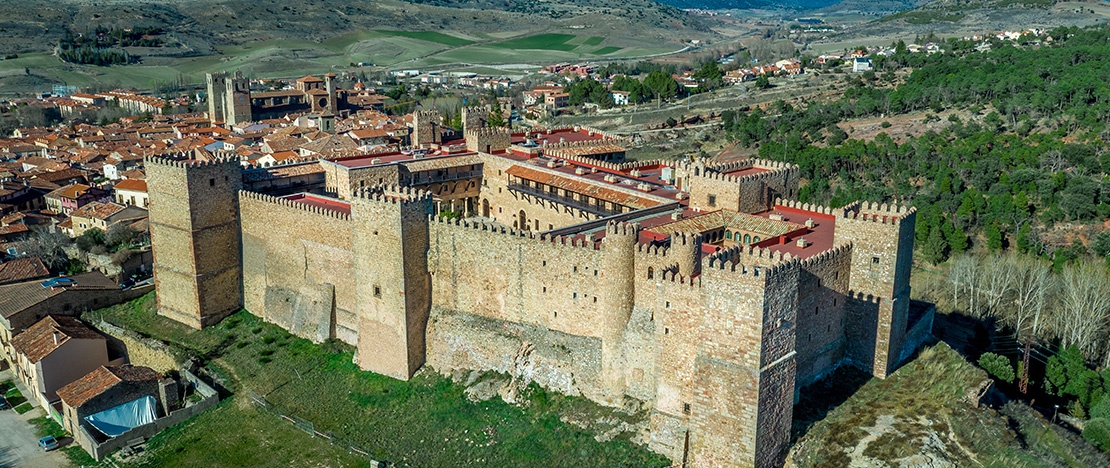
Castilla-La Mancha: Sigüenza
Sigüenza, in Guadalajara province, is one of those places where you can travel back in time. Its castle, now a dreamy Parador hotel, its cathedral, of Romanesque origin with later Gothic elements, and the Plaza Mayor are just a part of its extensive architectural heritage. In the region of La Serranía you can visit protected natural spaces such as the Barranco del Río Dulce Natural Park and the Saladares del Río Salado salt marshes reserve. Also, if you are in Madrid and want to visit this town in La Mancha, which is only 130 kilometres away, you can do so sustainably, thanks to the Sigüenza Train. Troubadours, knights and princesses will liven up your journey on board with music, theatre and tastings of delicious sweets such as yemas del Doncel.
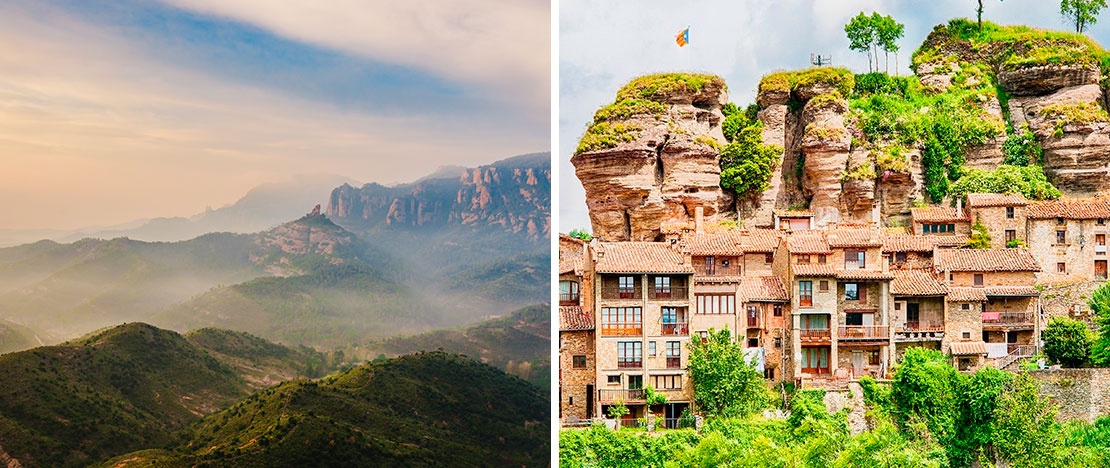
Catalonia: Mura and Rupit
Less than a hundred kilometres separate the two towns in the province of Barcelona distinguished by UN Tourism. Mura is located at the entrance to the Sant Llorenç del Munt i l'Obac Natural Park and is shaped by wine-growing. You can see for yourself if you follow the Tinas route, a tour of the original traditional stone tubs that still stand among the vineyards. Its charming historic centre, with narrow streets and picturesque squares, along with the Mura Running Trail initiative – offering routes for all levels so everyone can enjoy the stunning mountain scenery – are also fantastic options.In Rupit you will be amazed by its suspension bridge, dating back to 1945. Two other notable sights are the 10th-century chapel of Sant Joan de Fàbregues, and the castle, standing 800 metres above sea level. However, the most fascinating thing to see will surely be the Sallent waterfall, with a spectacular drop of more than 100 metres. The 'Night Sky Quality' environmental seal also ensures excellent visibility of the natural surroundings of this medieval village at night.
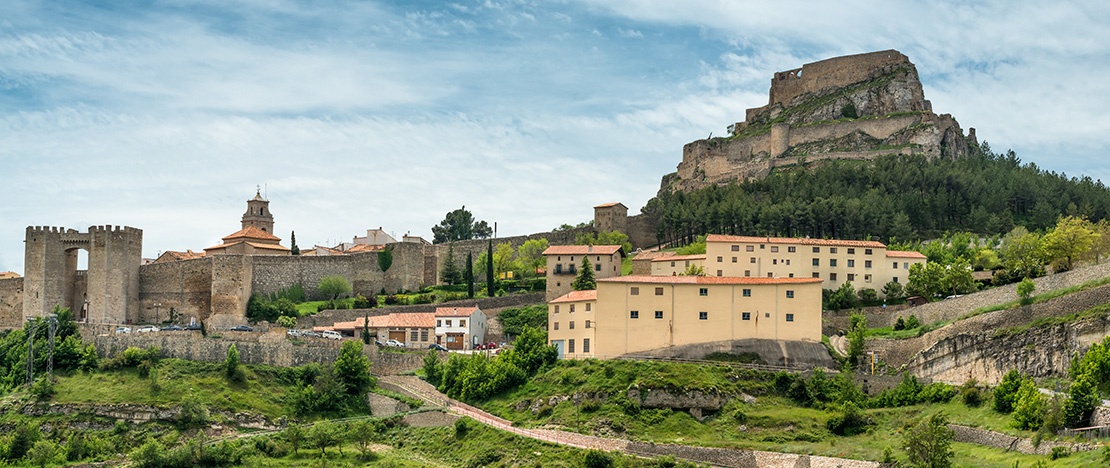
Region of Valencia: Morella
A medieval wall nearly two kilometres long, with seven gates and ten towers, encircles the beautiful town of Morella in Castellón. It has archaeological sites of great importance, such as the cave paintings of Morella la Vella and dry stone walls, a UNESCO World Heritage Site. At the top of the village sits its impressive castle, more than a thousand metres above sea level. Special mention should be made of its excellent cuisine, featuring locally ingredients, its distinctive croquettes known as 'croquellanas', which are triangular or half-moon in shape, as well as the star product: black truffles.
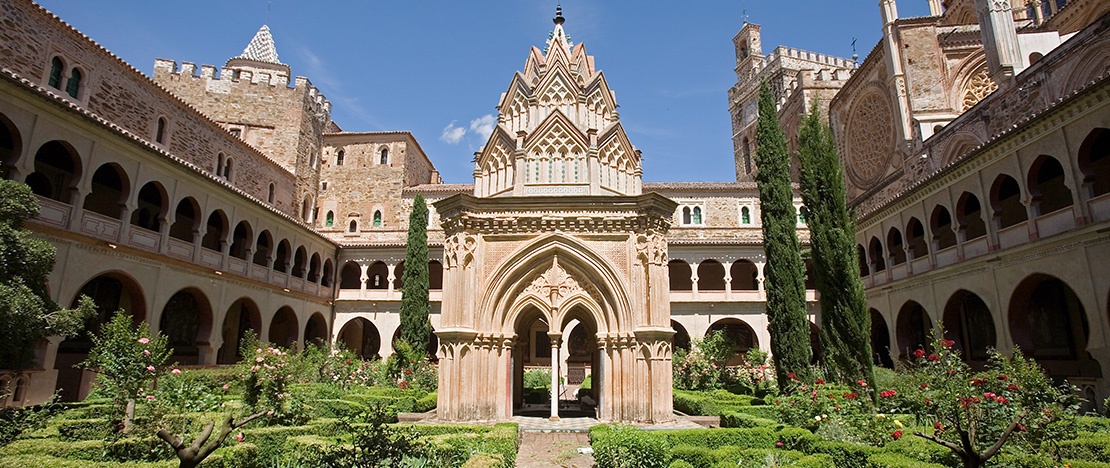
Extremadura: Guadalupe
The Royal Monastery of Santa María de Guadalupe, a UNESCO World Heritage Site, is undoubtedly the icon of this historic destination of cobbled streets in the province of Cáceres. The library of this Gothic-Mudejar style monument houses the codices known as Illuminated Manuscripts. The porticoed houses, Gil Cordero's house, the 17 fountains scattered throughout the town and the Mudejar gallery are other points of interest. You can also discover the network of the Caminos a Guadalupe, 13 pilgrimage routes to be followed on foot, by bicycle or on horseback, and to visit incredible natural areas such as the Villuercas Ibores Jara Geopark. If your trip coincides with the Geodisea Festival in November, you can participate in a multitude of activities related to geology, adventure, cultural heritage and local cuisine.
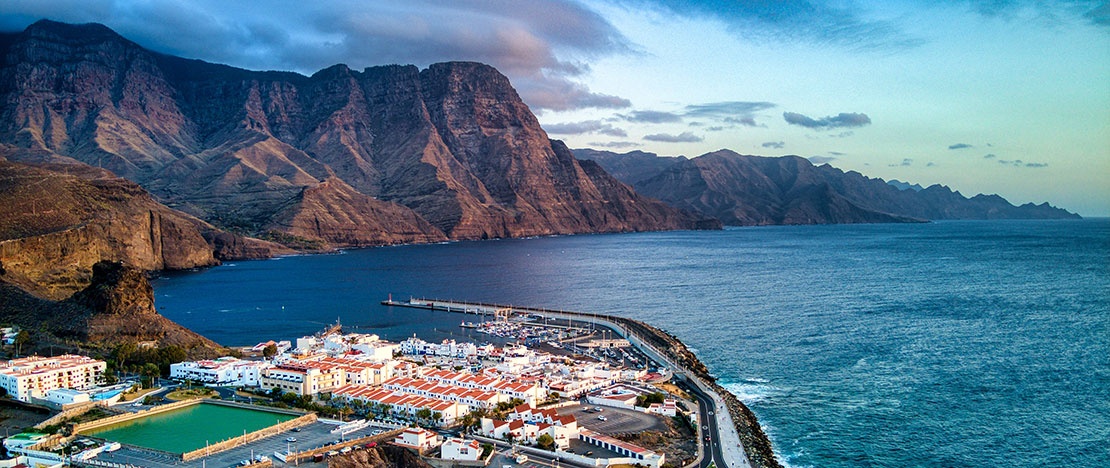
Canary Islands: Agaete
The volcanic landscape merges with the sea in Agaete. The historic quarter of this town in Gran Canaria is a fine example of the island’s architecture, with whitewashed houses, wooden balconies and elegant interior courtyards. Among them is the two-colour façade of the Church of La Concepción. Also worth a visit is the Huerto de las Flores, a century-old botanical garden with more than 100 exotic and tropical species. The Maipés necropolis is one of the most important archaeological sites on the island. While the wild beaches and natural pools of Las Salinas, three pools created by eruptions, invite you to enjoy the water of the Atlantic Ocean.
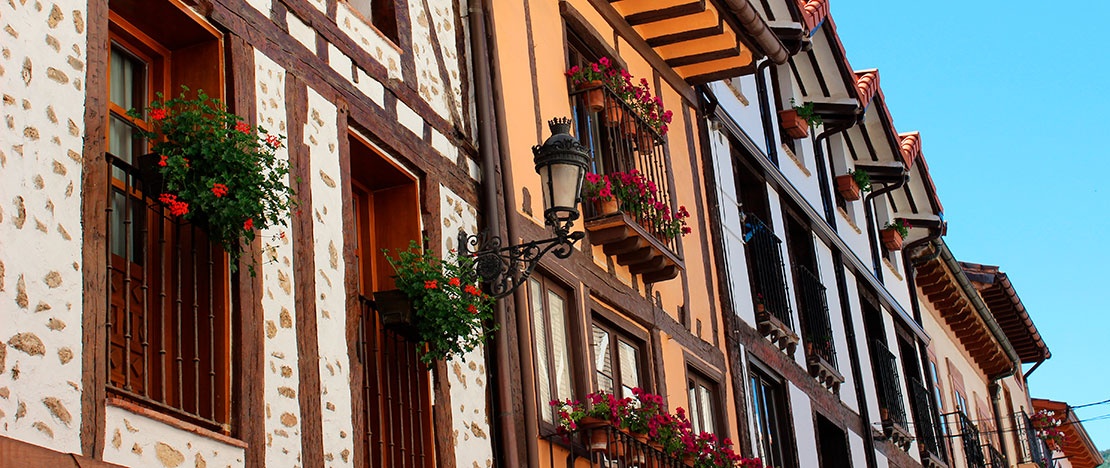
La Rioja: Ezcaray
The town of Ezcaray, in the heart of the hills of La Rioja, has a well-kept historic quarter that invites you to take a stroll. Among its arcades and balconies full of flowers, there are unique buildings such as the Real Fábrica de Paños de Santa Bárbara, a former textile factory which today houses the Town Hall, the Royal Theatre and a hostel. Other sights in the town include the adjoining Casa de Tintes (El Fuerte), the Palace of Archbishop Barroeta and the Angel Palace, both dating from the 18th century. For its part, the Gothic church of Santa María la Mayor is striking for its fortifications. The location of this village lets you enjoy nature all year round. In addition to the hiking routes, in winter you can visit the nearby ski resort of Valdezcaray. And it is worth trying the good local cuisine, centred on wine, in restaurants that combine traditional flavours with the avant-garde.
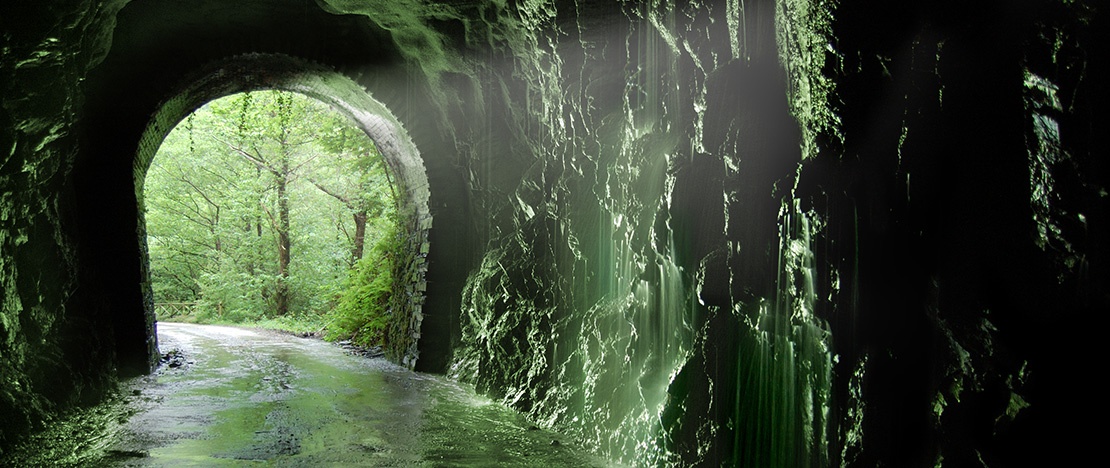
Navarre: Lekunberri
In the heart of the Navarrese valley of Larraun, less than 50 kilometres from Donostia-San Sebastián, lies this village with exceptional natural and cultural heritage. From its old quarter, with 12th-century stone houses, to the shrine of San Miguel de Aralar, with more than a thousand years of history. The Plazaola Greenway lets you enjoy more than 60 kilometres of unique nature on foot, by bike or even on horseback. In the Beigorri adventure park you can zip-line through its grove and enjoy fascinating views from the Mendukilo Cave .
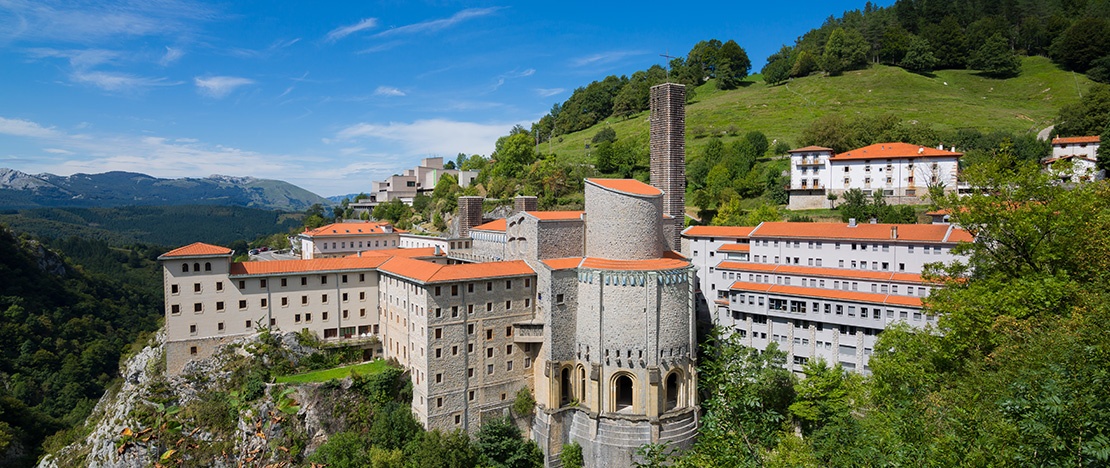
The Basque Country: Oñati
Another cave, Arrikrutz, is one of the must-see places in this village in Gipuzkoa. The historic centre of Oñati is full of interesting buildings such as Sancti Spiritus University, a prominent example of the Basque Renaissance; the 15th-century Gothic church of San Miguel; the 16th-century Bidaurreta Monastery; and the Antia, Madinabeitia and Baruekua palaces. Another recommended visit is the famous shrine of Arantzazu. You can try delicious local products such as Idiazábal cheese, talo (corn cakes) or txakoli wine. In short, an ideal destination for lovers of history, art, gastronomy and nature.