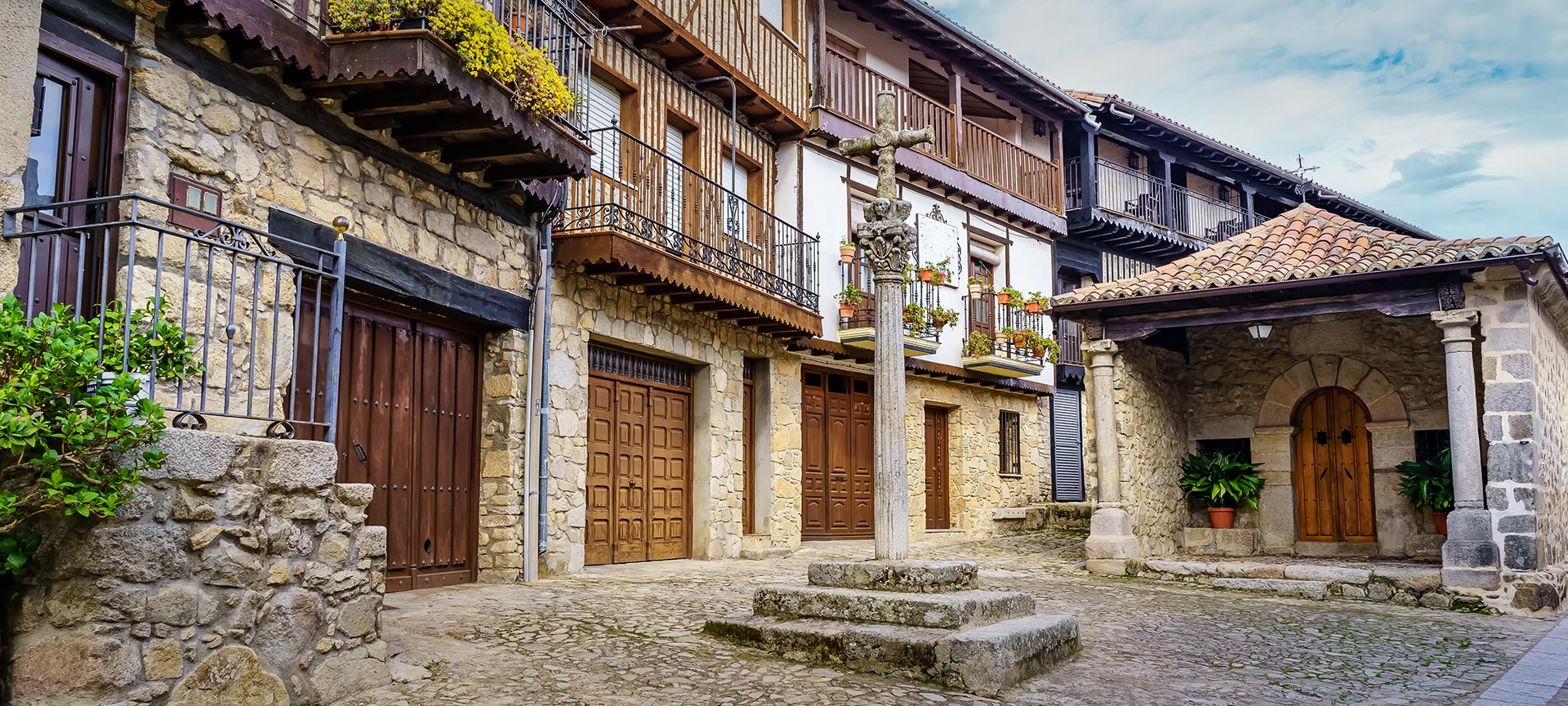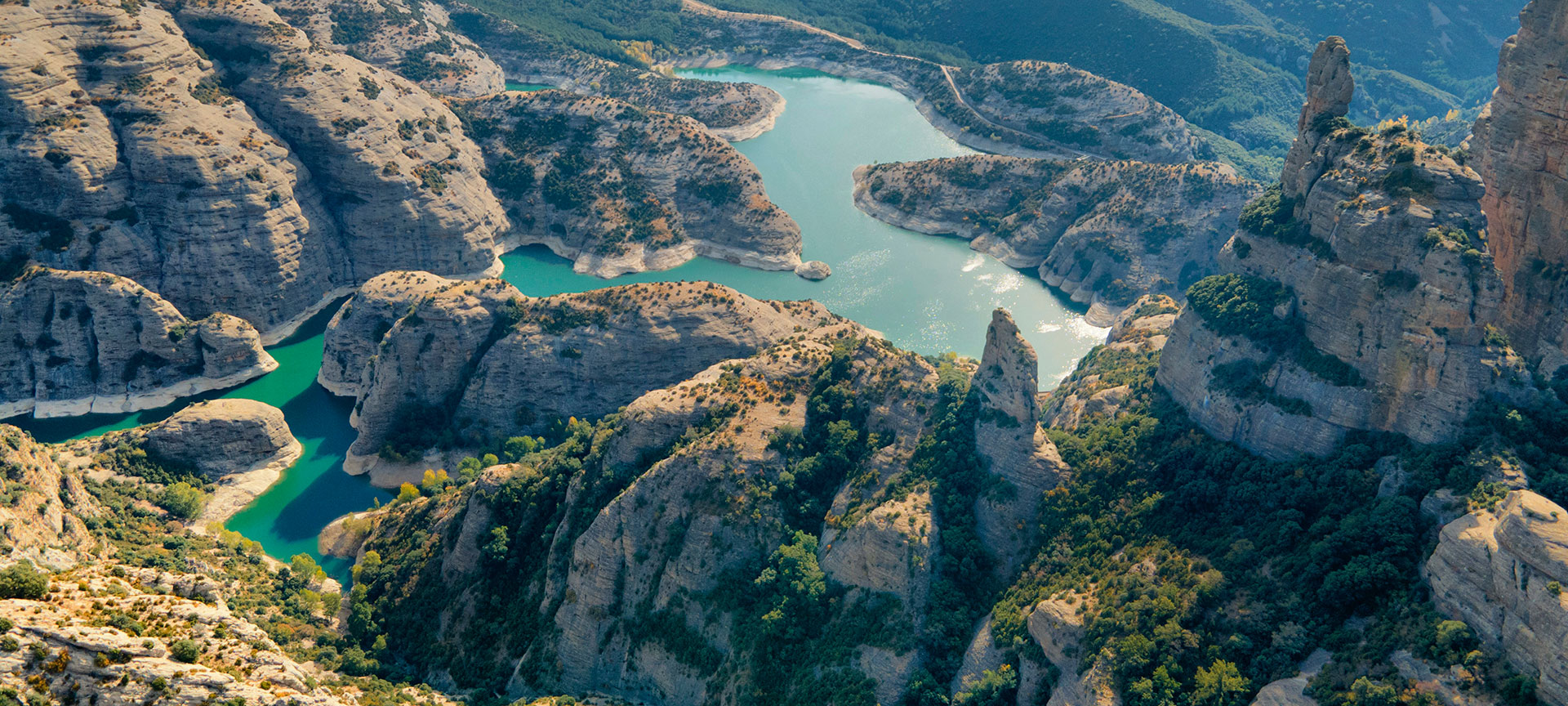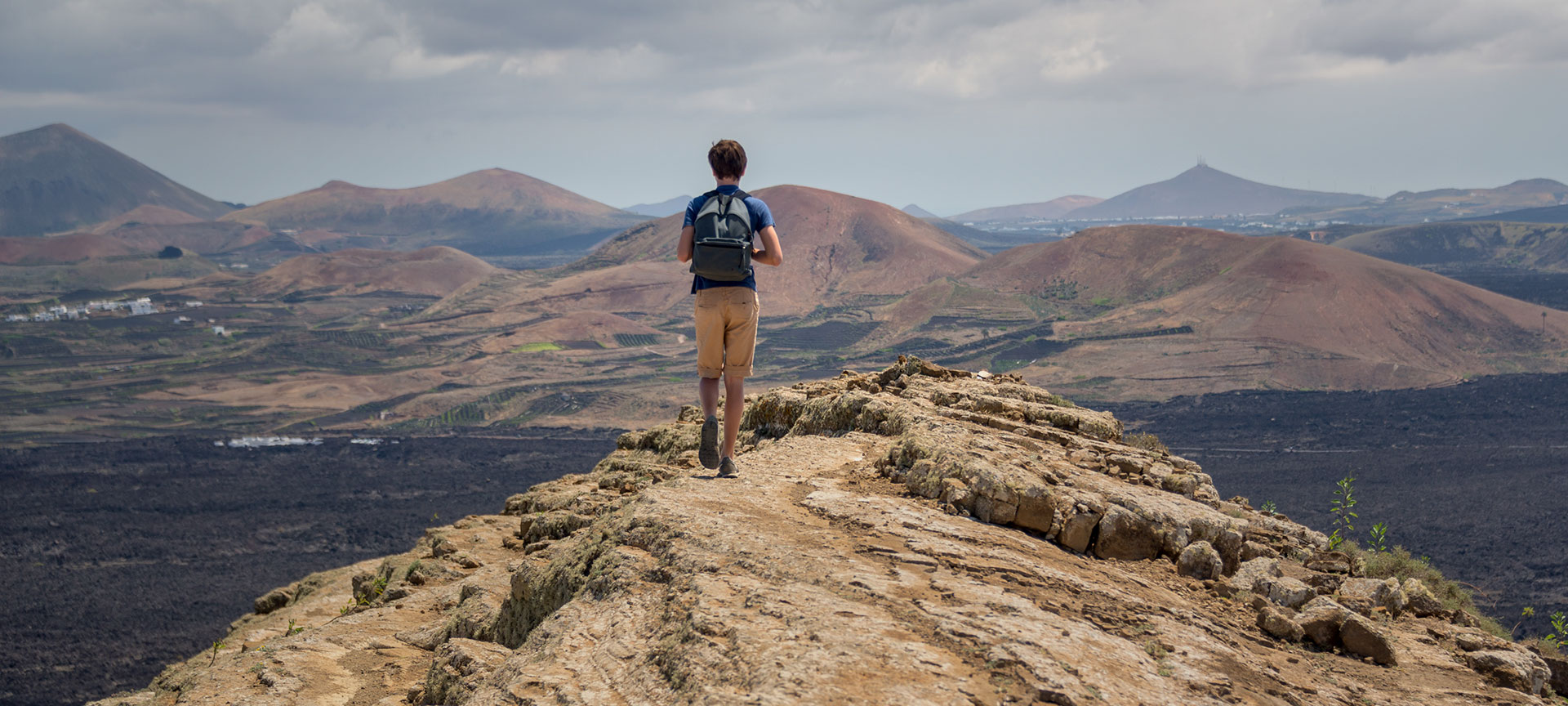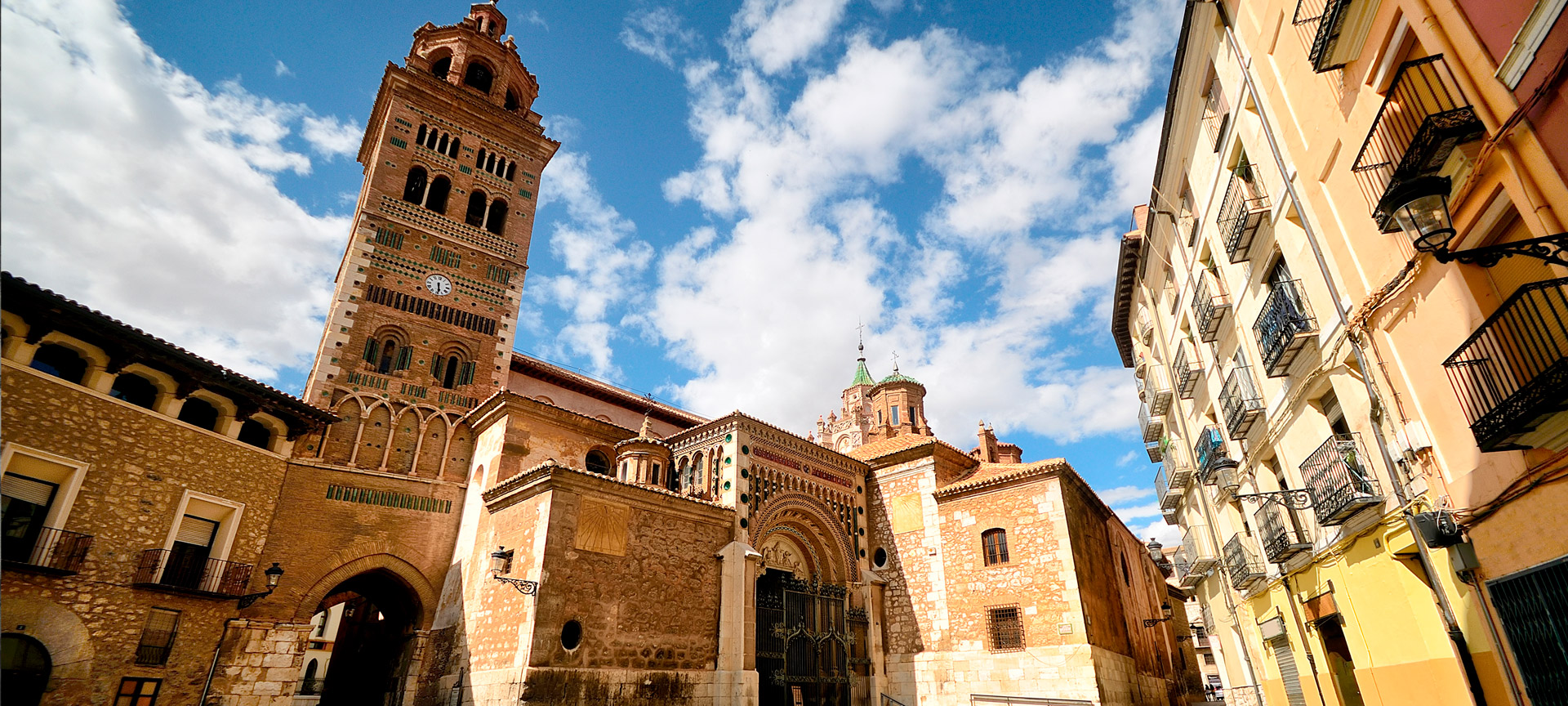
Landing in a big city but dreaming of exploring parts of Spain you've never heard of? The entire country is connected by an extensive rail network, allowing you to explore less crowded destinations in comfort. You will be able to admire the charm of lesser-known territories, but ones with a wealth of unimaginable landscapes and culture.As the train is one of the most ecological and relaxing ways to travel, here are five ideas for micro-adventures from some of Spain's most populated cities to: Teruel, Cuenca, Monserrat, Orduña and Jaén. Are you coming along?
From Valencia to Mudejar Teruel... and back by bicycle
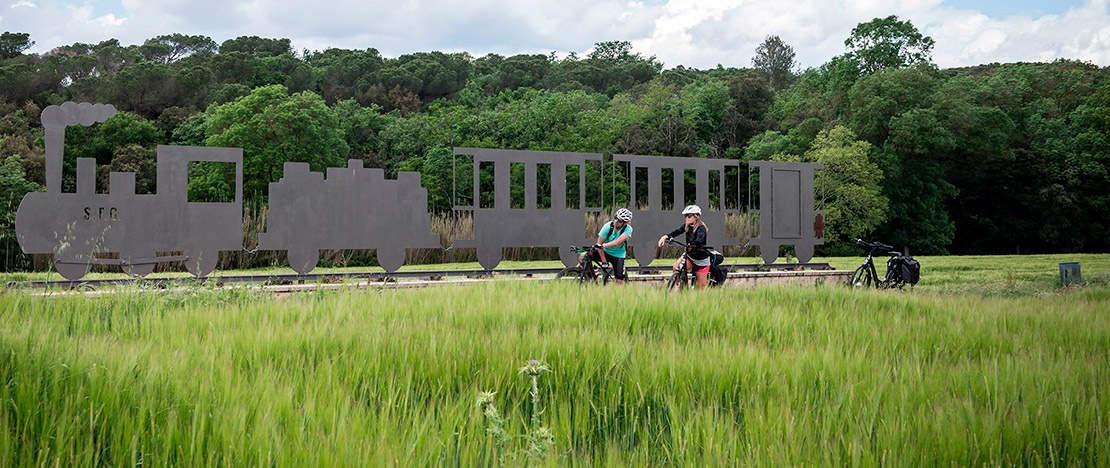
Renfe's Media Distancia trains offer many possibilities to move between cities. One example is the line linking Valencia, from its central Estación del Norte station, with Teruel in about two and a half hours. This city is the main reference point for Mudéjar architecture, the exclusively Iberian, Arab-influenced medieval architectural style that predominates in Aragón and is a UNESCO World Heritage Site. In addition, in this charming city you have other must-visit sites such as the mausoleum of the iconic Lovers of Teruel, the aqueduct of the arches or the Óvalo promenade, among others.If you are a cycling enthusiast, we have a plan for your return trip that you will love. You can travel with your bike on the outbound train and use it to return via the Greenways, former railway routes that have been rehabilitated for pedestrians and cycle tourists. The longest Greenway in Spain that connects Teruel with Sagunto is the Ojos Negros, which stretches for 183 kilometres in two sections: the Aragonese and the Valencian. Another 50 kilometres of quiet tracks and cycle paths through the orange groves of the Valencian huerta will take you to the city of Valencia. On the way, you have attractive stops such as Jérica, the beautiful waterfall of Salto de la Novia, in Navajas, and Segorbe. The route is low-difficulty, as it is all downhill, and can be divided into easy stages.
From Madrid to Cuenca, a World Heritage city
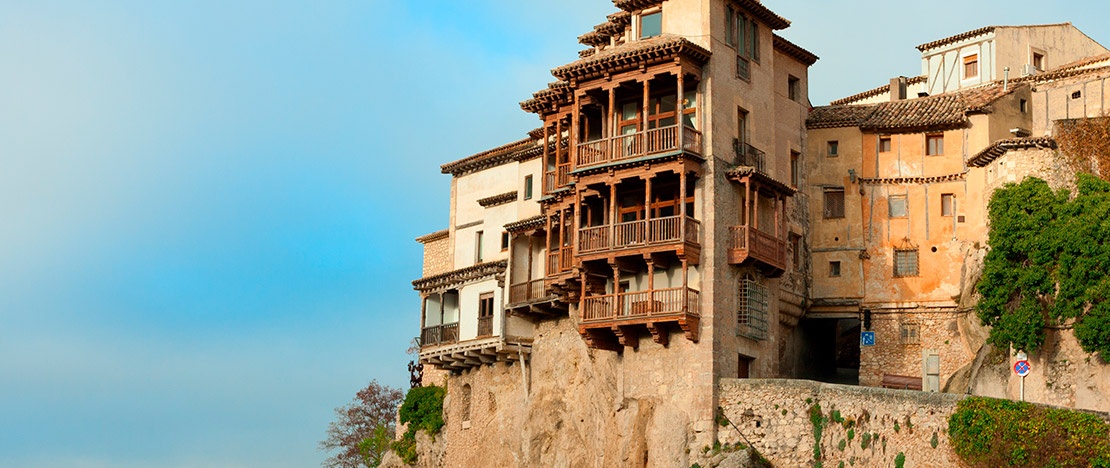
Madrid is connected by train to several World Heritage cities, such as Toledo, Segovia or the one we suggest, Cuenca. The high-speed train (AVE) takes about an hour from the Puerta de Atocha-Almudena Grandes station.Its old quarter is magical, with the Cathedral, its famous Hanging Houses and the Museum of Contemporary Art, housed in a former 17th century convent. Moreover, the old part of the city is perched over two canyons: the gorge of the river Júcar, to the north, and the gorge of the Huécar, from the east, overlooked by the Hanging Houses.A stroll along either of these two gorges, full of vegetation, upstream, is a delight. For example, you can follow the canyon to the Molinos de Papel, a 17th century farmhouse. The route is about 20 kilometres round trip from the city.If you are looking for thrills and excitement and want to observe the spectacular scenery from above, Cuenca has one of the longest double urban zip lines in Europe. In summer, special night jumps are even scheduled. Can you imagine the experience of 'flying over' the city with the moon as a backdrop?
From Barcelona to the magical monastery of Montserrat
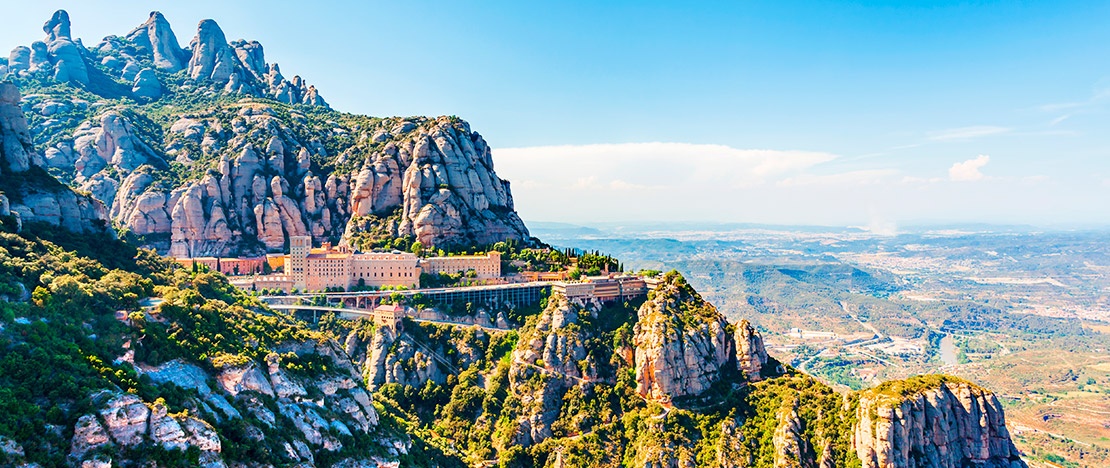
Very close to Barcelona, a pleasant hour-long journey by commuter train, lies Montserrat, a mountain range sacred to the Catalans, whose unmistakable profile of a "serrated mountain" forms the shape of a crown. To climb to its grandiose Monastery you can choose between two vehicles that are as peculiar as they are sustainable. If you get off at the Montserrat-Aeri stop, you can take the cable car to the temple. If you want to use the rack railway instead, you’ll need to get off at the next station on line R5, Monistrol de Montserrat.Once you reach the top, the landscape is spectacular: the abbey, where the Moreneta, the patron saint of Catalonia, is venerated, the museum and the many possible excursions on offer. If you are in good shape, you can try to climb Sant Jeroni, the highest peak of the mountain range, which stands around five kilometres from the church. There are also two funiculars: one that goes up to the Sant Joan viewpoint, with unforgettable panoramic views, and another that descends to the Santa Cova.The Tot Montserrat combined ticket not only includes all these means of transport (metro to move around Barcelona, train to Montserrat, cable car and/or rack railway, funiculars), but also entrance tickets to the monastery and the museum and even a buffet lunch.
From Bilbao to Orduña: Spain's highest waterfall
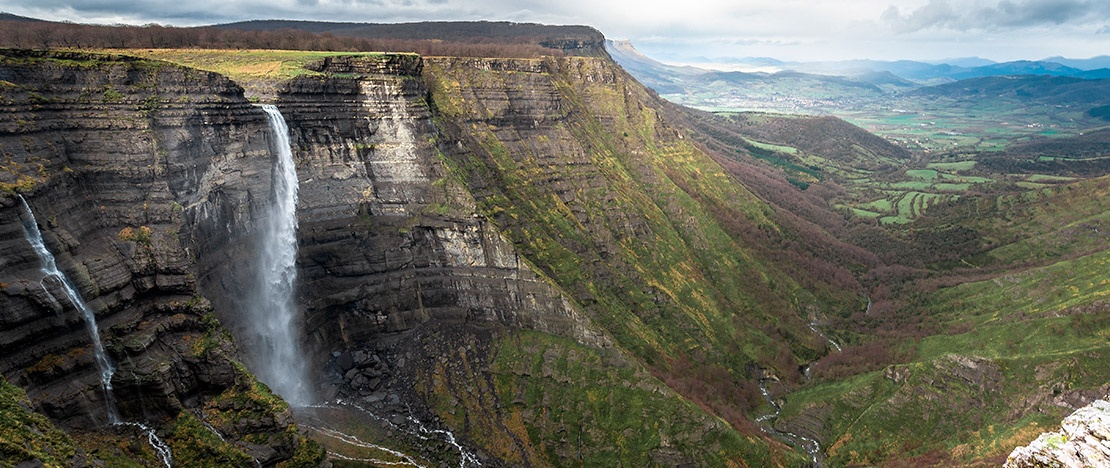
From Bilbao, famous, among other things, for its delicious pintxos, you can go on one of the most incredible excursions in Spain. This is a visit to the Salto del Nervión, the spectacular source of this river, which you can reach on Renfe's C3 commuter train line. The route ends in the town of Orduña a historic-monumental site in an idyllic setting crowned by the craggy Sierra Salvada, where the Basque provinces of Bizkaia and Alava and the Castilian province of Burgos meet.You can view the waterfall from below, going up the watercourse along a path from the village of Delika, which is also accessible on foot from Orduña (about 17 kilometres round trip, which does not require much effort). Or you can do it from above, in a more demanding way, a 25-kilometre circular route ascending the Sierra Salvada to the viewpoint located on Mount Santiago (Burgos). The Nervión waterfall is the highest waterfall in Spain, at approximately 220 metres.
From Seville to Jaén: the sea of olive trees
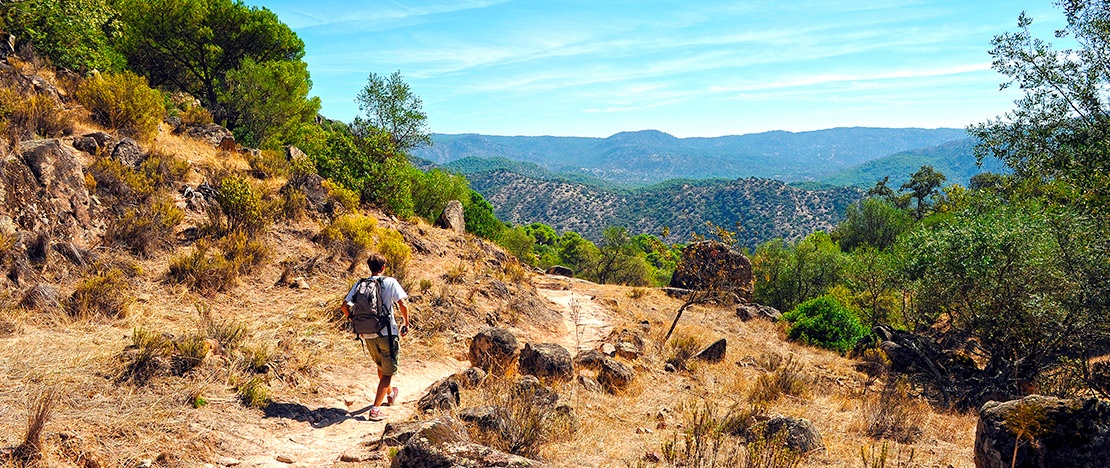
Every day, a train line traverses half of Andalusia from the ancient coastal city of Cadiz to the city of Jaén, passing through Seville and Cordoba. In the province of Jaén you will have the opportunity to observe one of the most unique landscapes in Europe: the infinite 'sea of olive trees' from which Spain's liquid gold, olive oil, is obtained.From Seville, the train journey takes about three and a half hours, passing through a wide variety of ecosystems. For example, in Andújar, there are active tourism companies that guide you through the mountains to try to observe an icon of Spanish fauna in the wild: the Iberian lynx.The final route through the olive groves ends in the city of Jaén with its rich artistic heritage. Your attention will soon be drawn to the impressive rocky outcrop on which the Castle of Santa Catalina and the Parador de Turismo stand side by side. It’s worth taking the time to ascend on foot, as it is only a leisurely 4 km walk from the town centre. You will be impressed by the eagle's eye view of the city and the lush green 'sea' of its olive groves!